Infrared Thermography (IR)
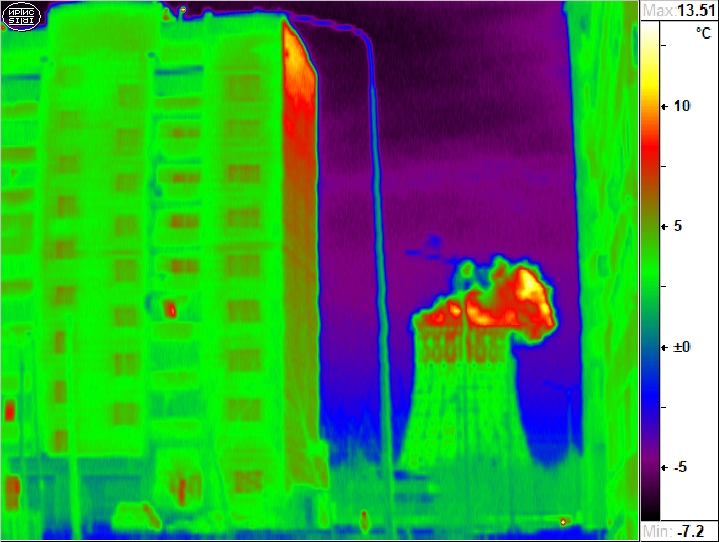
Infrared Thermography (IR) is a non-destructive testing (NDT) technique used to detect and visualize surface temperature distributions using high-sensitivity thermal imaging cameras.
The method enables the identification of thermal anomalies, potential hidden defects, energy losses, and abnormal operating conditions without direct contact with the inspected component and, in many cases, without interrupting normal operations.
Infrared thermography is widely used in the industrial, energy, Oil & Gas, construction, and infrastructure sectors.
Working Principle
All objects with a temperature above absolute zero emit infrared radiation. Thermal imaging cameras detect this radiation and convert it into thermal images, allowing inspectors to analyze apparent temperature distributions across the surfaces of inspected objects.
Abnormal temperature variations may indicate defects, equipment malfunctions, or deterioration processes.
Accurate temperature assessment requires consideration of surface emissivity, reflected radiation, environmental conditions, and measurement geometry.
Main Stages of Infrared Inspection
Inspection Planning
Inspection objectives, equipment operating conditions, and areas requiring examination are defined.
Thermal Image Acquisition
Thermal imaging cameras record surface temperature patterns while equipment remains in operation, where safe and technically appropriate.
Thermogram Analysis
The acquired thermal images are processed and interpreted by qualified inspection personnel.
Thermal Anomaly Assessment
Temperature differences are evaluated and correlated with possible technical, mechanical, electrical, or operational causes.
Technical Reporting
A detailed technical report is prepared, including thermal images, inspection findings, analysis, and recommendations for further investigation or corrective actions.
Detectable Thermal Anomalies
Infrared thermography can help identify:
- Electrical overheating
- Defective electrical connections
- Electrical overload conditions
- Heat losses
- Deteriorated thermal insulation
- Moisture intrusion under suitable conditions
- Potential leaks in district heating networks
- Mechanical equipment overheating
- Abnormal friction
- Heating and cooling system malfunctions
Thermal anomalies are indirect indicators and may require additional diagnostic methods to confirm their underlying causes.
Electrical Applications
Infrared thermography is particularly useful for inspecting:
- Electrical switchboards and distribution panels
- Transformer substations
- Power transmission and distribution lines
- Circuit breakers and disconnect switches
- Photovoltaic systems
- Industrial electrical installations
Early identification of abnormal hot spots supports preventive maintenance and helps reduce the risk of equipment failures and unplanned shutdowns.
Mechanical Applications
Thermographic inspections can support condition monitoring of:
- Electric motors
- Pumps
- Compressors
- Fans
- Gearboxes
- Bearings
- Turbines
Abnormal temperature patterns may indicate excessive friction, lubrication problems, mechanical wear, or other operating irregularities.
Energy Efficiency Applications
Iralcorr uses infrared thermography to support:
- Energy audits
- Identification of heat losses
- Thermal insulation assessment
- Building energy performance evaluation
- Monitoring of heat distribution networks
Thermal imaging provides valuable information for identifying areas where energy efficiency improvements may be required.
Drone-Based Thermal Inspections (UAV)
For extensive infrastructure and difficult-to-access locations, thermal imaging cameras can be integrated with Unmanned Aerial Vehicles (UAVs) to perform efficient inspections.
Typical applications include:
- Power transmission and distribution lines
- Photovoltaic installations
- Oil and gas pipeline corridors
- Bridges and infrastructure
- Industrial facilities
Drone-based thermography can improve inspection accessibility, reduce the need for working at height, and support the assessment of large industrial areas.
Advantages of Infrared Thermography
- Non-contact inspection
- Inspection without operational shutdowns in suitable conditions
- Rapid data acquisition
- Large-area inspection capability
- Early identification of thermal anomalies
- Support for predictive and condition-based maintenance
- Improved energy efficiency assessment
Limitations
The effectiveness of infrared thermography depends on environmental conditions, surface accessibility, material emissivity, operating conditions, and the correct interpretation of thermal images by qualified personnel.
Infrared cameras measure radiation emitted and reflected from surfaces and cannot directly detect defects located deep inside opaque metallic components.
Reliable interpretation may require comparison with operating data and complementary inspection techniques.
Industrial Applications
Italcorr provides infrared thermographic inspections for:
- Industrial facilities
- Energy infrastructure
- Power transmission and distribution lines
- District heating networks
- Photovoltaic installations
- Service stations and fuel storage facilities
- Commercial and industrial buildings
- Oil & Gas installations
Italcorr Infrared Thermography Services
Italcorr provides professional infrared thermography services for equipment condition monitoring, predictive maintenance, electrical and mechanical inspections, and energy efficiency assessment.
Our inspection activities use advanced thermal imaging equipment and appropriate technical procedures, with findings documented in detailed technical reports.
The results support the identification of potential operating anomalies, maintenance prioritization, risk management, and improvements in industrial asset reliability.