AI-Based Inspection
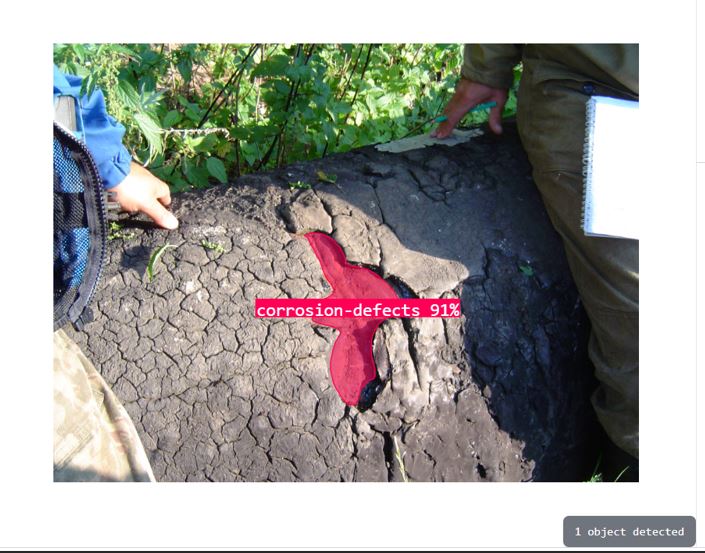
AI-Based Inspection uses Artificial Intelligence (AI), Computer Vision, and automated image analysis to support the detection of corrosion, coating defects, surface deterioration, and other anomalies in industrial facilities and infrastructure.
Italcorr develops and integrates AI-based solutions with traditional Non-Destructive Testing (NDT) methods, corrosion monitoring, and Asset Integrity Management to make inspection activities faster, more consistent, and easier to document.
Computer Vision for Corrosion Detection
Computer Vision algorithms can analyze images acquired during inspections and automatically identify areas exhibiting visual characteristics associated with:
- Surface corrosion
- Rust formation
- Visible pitting corrosion
- Coating deterioration and delamination
- Blistering and coating failure
- Surface anomalies
- Damage to metallic components
Suspected areas can be highlighted directly in the images and subsequently reviewed by qualified inspection personnel.
How AI-Based Inspection Works
The inspection workflow may include several stages:
1. Image Acquisition
Images can be captured using smartphones, industrial cameras, Unmanned Aerial Vehicles (UAVs), robotic inspection systems, or conventional visual inspection procedures.
2. AI Image Analysis
A Computer Vision model processes the acquired images and searches for visual patterns associated with the defect categories included in its training dataset.
3. Anomaly Detection and Classification
Potentially affected areas are localized, highlighted, and classified according to the model’s detection capabilities.
4. Inspector Verification
AI-generated findings are reviewed and technically assessed by qualified inspection personnel.
5. Integration with Other Inspection Data
Where necessary, the results can be compared with Ultrasonic Testing (UT), Visual Testing (VT), corrosion measurements, cathodic protection data, thermography, and other diagnostic techniques.
Industrial Applications
AI-Based Inspection can be applied to:
- Pipelines and industrial piping systems
- Storage tanks
- Steel structures
- Bridges and infrastructure
- Industrial facilities
- Refineries and storage terminals
- Difficult-to-access structures
- Images acquired during UAV inspections
- Historical photographic inspection archives
Large-Scale Image Analysis
One of the main advantages of Artificial Intelligence is its ability to perform preliminary screening of large image datasets.
Drone inspections and photographic surveys can generate hundreds or thousands of images during a single inspection campaign.
An AI-based system can assist inspectors by identifying images containing potential anomalies, allowing technical specialists to focus their attention on areas requiring detailed assessment.
This approach can improve inspection efficiency and facilitate the management of large volumes of visual inspection data.
AI + NDT: Combining Automated Detection with Engineering Assessment
Artificial Intelligence does not replace Non-Destructive Testing or professional inspector judgment.
A potential corrosion indication detected in an image may require further verification using appropriate inspection methods.
A possible inspection workflow includes:
Visual Testing (VT) → Ultrasonic Testing (UT) → Magnetic Particle Testing (MT) / Liquid Penetrant Testing (PT), where applicable → Wall Thickness Measurement → Engineering Assessment
The selection and sequence of inspection techniques depend on the material, component geometry, suspected degradation mechanism, and inspection objectives.
This approach positions AI as a screening and decision-support tool, while technical verification remains based on established inspection methods and engineering evaluation.
AI for Long-Term Condition Monitoring
Another application involves comparing images of the same component acquired at different times.
Time-based image analysis can support:
- Identification of newly developed anomalies
- Monitoring of visible corrosion progression
- Comparison of surface conditions over time
- Identification of areas requiring follow-up inspection
- Maintenance planning and prioritization
Integration with inspection databases and Geographic Information Systems (GIS) can also enable detected anomalies to be associated with specific locations within an industrial facility or infrastructure network.
Reliable comparison requires consideration of image quality, lighting conditions, camera position, and changes in the inspection environment.
Human-in-the-Loop Inspection
ITALCORR considers Artificial Intelligence a supporting technology for engineers and inspection specialists.
For this reason, our approach is based on the Human-in-the-Loop principle, where AI-generated results are reviewed, verified, and interpreted by qualified technical personnel.
The objective is not to replace inspector expertise but to provide an additional analytical capability that can improve inspection efficiency, consistency, and traceability.
Human oversight remains essential for evaluating uncertain indications, identifying false positives, and determining whether additional inspection is required.
AI Model Development and Validation
The performance of an AI-based inspection system depends on several factors, including image quality, training dataset characteristics, environmental conditions, and the types of defects being investigated.
For reliable industrial applications, AI models must be appropriately trained, tested, and validated before operational deployment.
Validation should consider:
- Detection accuracy
- False-positive and false-negative rates
- Dataset representativeness
- Performance under different lighting and environmental conditions
- Generalization to different materials and surface conditions
- Consistency of results across inspection campaigns
Where necessary, AI-generated indications should be correlated with conventional inspection techniques to verify the presence and characteristics of suspected defects.
Towards Intelligent Asset Integrity Management
The integration of:
Artificial Intelligence + Computer Vision + Non-Destructive Testing + Corrosion Monitoring + Historical Inspection Data
creates opportunities for developing advanced tools for industrial asset integrity management.
By combining automated image analysis with established engineering inspection methods, asset operators can improve data interpretation, prioritize inspection activities, and support more informed maintenance decisions.
Italcorr is developing AI-Based Inspection applications for corrosion detection and surface defect identification, with particular emphasis on integrating automated image analysis with conventional inspection methodologies.
Our objective is to support the evolution towards Intelligent Asset Integrity Management, where digital technologies, inspection data, and engineering expertise work together to improve the reliability and long-term performance of industrial infrastructure.