
Pearson Survey
Pearson Survey is an above-ground electrical survey method used to detect and locate defects in the protective coating of buried metallic pipelines.
Damage to pipeline coating allows electrical current to interact more easily between the pipeline and the surrounding soil. These coating defects can become areas of increased corrosion risk and may significantly influence the performance of a cathodic protection system.
Italcorr provides Pearson Survey services for buried pipelines to identify coating defects, support corrosion assessment and help determine locations requiring further investigation.
What Is a Pearson Survey?
The Pearson Survey is a non-intrusive method for detecting coating defects on buried pipelines without excavation.
An alternating electrical signal is applied to the pipeline. The signal generates a voltage gradient in the soil around coating defects where electrical current can pass between the pipeline and the surrounding environment.
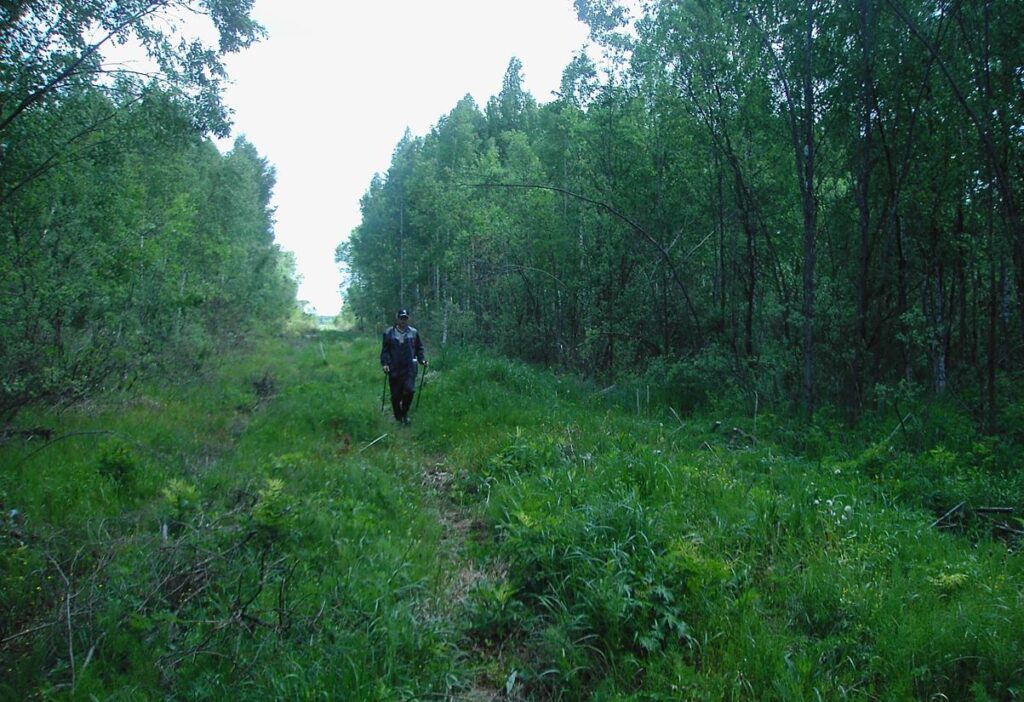
Two operators normally walk along the pipeline route while maintaining a defined separation distance.
Each operator uses ground-contact electrodes connected to a sensitive receiver.
Changes in the measured signal indicate variations in the electrical field in the soil and can reveal the presence of coating defects.
Principle of Operation
A transmitter introduces an AC signal onto the pipeline.
When the pipeline coating is in good condition, electrical current leakage into the surrounding soil is relatively limited.
At a coating defect, electrical contact between the pipeline steel and soil increases.
This produces a local voltage gradient in the ground.
The Pearson receiver detects changes in this gradient as the survey team moves along the pipeline.
By analysing the signal response, the position of a coating defect can be determined from the surface.
What Can Pearson Survey Detect?
Pearson Survey can be used to identify various types of coating anomalies, including:
- coating holidays;
- mechanical coating damage;
- cracks and deterioration;
- damaged coating at joints;
- areas of coating disbondment associated with electrical leakage;
- defects caused during construction or excavation;
- localized coating degradation;
- sections with increased electrical contact with the soil.
The method identifies electrical indications associated with coating defects rather than directly measuring metal loss.
Pearson Survey Equipment
A typical Pearson Survey system includes:
- signal transmitter;
- sensitive receiver;
- ground-contact electrodes;
- connecting cables;
- pipeline connection equipment;
- route location equipment;
- GPS/GNSS positioning equipment where required.
The transmitter frequency and survey configuration are selected according to pipeline characteristics and field conditions.
Survey Procedure
Before starting the survey, the pipeline route and available electrical connections are identified.
The transmitter is connected to the pipeline and a suitable AC signal is applied.
The survey operators then move along the pipeline route while monitoring the received signal.
During the inspection:
- the pipeline route is located;
- the AC signal is applied to the pipeline;
- operators walk along the pipeline maintaining the required spacing;
- changes in ground voltage are monitored;
- suspicious indications are investigated more closely;
- coating defect locations are identified;
- coordinates and field observations are recorded.
Detected locations can subsequently be marked for additional inspection or excavation.
Locating Coating Defects
When an abnormal signal is detected, the survey team reduces the inspection interval around the indication.
Additional measurements are performed from different positions to determine the point associated with the strongest electrical response.
This allows the coating defect to be localized with greater accuracy before excavation or further diagnostic testing.
Pearson Survey and Cathodic Protection
Pipeline coating and cathodic protection operate together as a corrosion control system.
The coating provides the primary barrier between the steel and the environment, while cathodic protection supplies protective current to exposed metallic areas.
When coating deterioration increases, the cathodic protection system may require more current to maintain adequate protection.
Pearson Survey can therefore help identify coating defects that contribute to:
- increased CP current demand;
- abnormal potential distribution;
- reduced cathodic protection efficiency;
- localized corrosion risk.
Factors Affecting Survey Results
The effectiveness of Pearson Survey depends on field conditions.
Important factors include:
- soil resistivity;
- soil moisture;
- pipeline burial depth;
- coating type;
- coating condition;
- defect size;
- electrical continuity of the pipeline;
- presence of insulating joints;
- interference from other buried structures;
- external electrical interference;
- quality of ground contact;
- transmitter frequency and signal strength.
These factors should be considered when interpreting survey results.
Soil Conditions
Good electrical contact between the survey electrodes and the ground is important.
Very dry, frozen or highly resistive soil can reduce measurement sensitivity.
Surface conditions such as asphalt, concrete or thick gravel may also make direct ground contact difficult.
The survey methodology should therefore be adapted to actual site conditions.
Pipeline Depth
Increasing pipeline burial depth generally reduces the intensity of electrical indications measured at the surface.
Accurate knowledge of the pipeline route and approximate depth can improve interpretation of Pearson Survey results.
Pipeline locating equipment may therefore be used together with the survey.
Interference from Other Structures
Nearby metallic structures can affect the electrical field generated by the survey signal.
Possible sources include:
- parallel pipelines;
- cable systems;
- grounding systems;
- metallic fences;
- railway infrastructure;
- other buried utilities.
Field indications should therefore be evaluated in relation to the surrounding infrastructure.
GPS Positioning and Defect Mapping
Detected coating defects can be recorded using GPS/GNSS coordinates.
The survey results can then be presented as a pipeline defect register containing:
- defect number;
- chainage;
- GPS coordinates;
- indication strength;
- pipeline section;
- field observations;
- recommended follow-up action.
This information can be integrated into GIS or pipeline integrity management systems.
Defect Classification
Pearson Survey indications can be classified according to their relative signal response.
The classification helps operators prioritize locations for additional inspection.
However, signal magnitude should not automatically be interpreted as direct metal loss or remaining wall thickness.
A strong indication identifies an electrically significant coating anomaly, while the actual condition of the pipe steel may require direct inspection.
Excavation Verification
Selected Pearson indications can be verified by excavation.
At the exposed pipeline, inspection may include:
- visual examination of the coating;
- coating defect measurement;
- corrosion assessment;
- ultrasonic thickness measurement;
- pit depth measurement;
- surface preparation;
- coating repair.
Comparing excavation results with survey indications also helps validate the field interpretation.
Integrated Pipeline Assessment
Pearson Survey is particularly effective when incorporated into a broader pipeline integrity assessment.
Italcorr can combine the method with:
CIPS Survey
Assessment of cathodic protection potential along the pipeline.
DCVG Survey
Detailed localization and assessment of coating defects.
PCM Survey
Pipeline current mapping and identification of abnormal current attenuation.
Stray Current Monitoring
Assessment of external DC electrical interference.
Soil Resistivity Measurements
Evaluation of environmental corrosivity and electrical conditions.
Cathodic Protection Testing
Verification of CP system operation and protection effectiveness.
The correlation of several independent datasets provides a more complete understanding of pipeline condition.
Applications
Pearson Survey can be applied to:
- oil pipelines;
- gas pipelines;
- water pipelines;
- industrial pipelines;
- firewater systems;
- buried plant piping;
- storage facility pipelines;
- long-distance transmission pipelines;
- distribution networks;
- other coated buried metallic structures.
Benefits of Pearson Survey
Pearson Survey provides several advantages:
- inspection from the ground surface;
- no excavation required during the initial survey;
- rapid investigation of long pipeline sections;
- localization of coating defects;
- identification of areas requiring detailed inspection;
- support for cathodic protection assessment;
- optimization of excavation programs;
- reduction of unnecessary excavations;
- support for coating rehabilitation planning;
- integration with other above-ground pipeline diagnostic methods.
Pearson Survey Reporting
A technical survey report may include:
- pipeline description;
- survey methodology;
- equipment used;
- transmitter configuration;
- pipeline route;
- inspection conditions;
- detected indications;
- GPS coordinates;
- defect register;
- route maps;
- field observations;
- interpretation of results;
- recommended verification locations;
- recommendations for further investigation.
Where Pearson Survey is combined with other techniques, the report can also include correlation with CIPS, DCVG and PCM results.
Pearson Survey Services by Italcorr
Italcorr provides Pearson Survey and coating defect detection services for buried metallic pipelines.
The survey can be performed as an independent coating investigation or as part of an integrated corrosion and pipeline integrity assessment.
By combining Pearson Survey with cathodic protection measurements, CIPS, DCVG and PCM, critical pipeline sections can be identified and prioritized for further inspection, excavation or coating rehabilitation.